The story · Chapter one
Five villages stopped going to their fields
Sawali taluka sits in Chandrapur district, in the east of Maharashtra, and the work there is the work it has always been. Cattle go out in the morning. Shepherds walk with them. The forest starts where the fields end, and everybody has lived alongside it their whole lives.
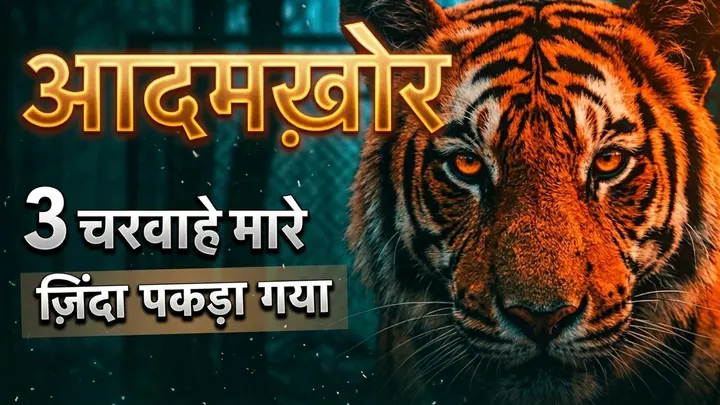
Then a tiger the forest department had catalogued as T-122 began taking people. Three shepherds were killed. A fourth person was injured. Twenty-three head of livestock went as well, which in that part of the country is not a statistic, it is somebody's entire savings walking off into the trees.
Vyahad. Samda. Nilsani. Pedagaon. Sonapur. Five villages, and in all five the same thing happened: people stopped going out to their own land. That is the part that does not make headlines. A man-eater does not only take the people it kills, it takes the ordinary working day away from everyone else.
- 3
- shepherds killed
- 23
- livestock taken
- 5
- villages in fear
- 30
- foot cage, each side
Chapter two
A tiger does not start this way
People are not on a tiger's list. We are the wrong shape, we smell wrong, and for an animal built to bring down a full-grown sambar we are not worth the trouble. A healthy tiger in good country will spend its whole life avoiding us, and most of them do.
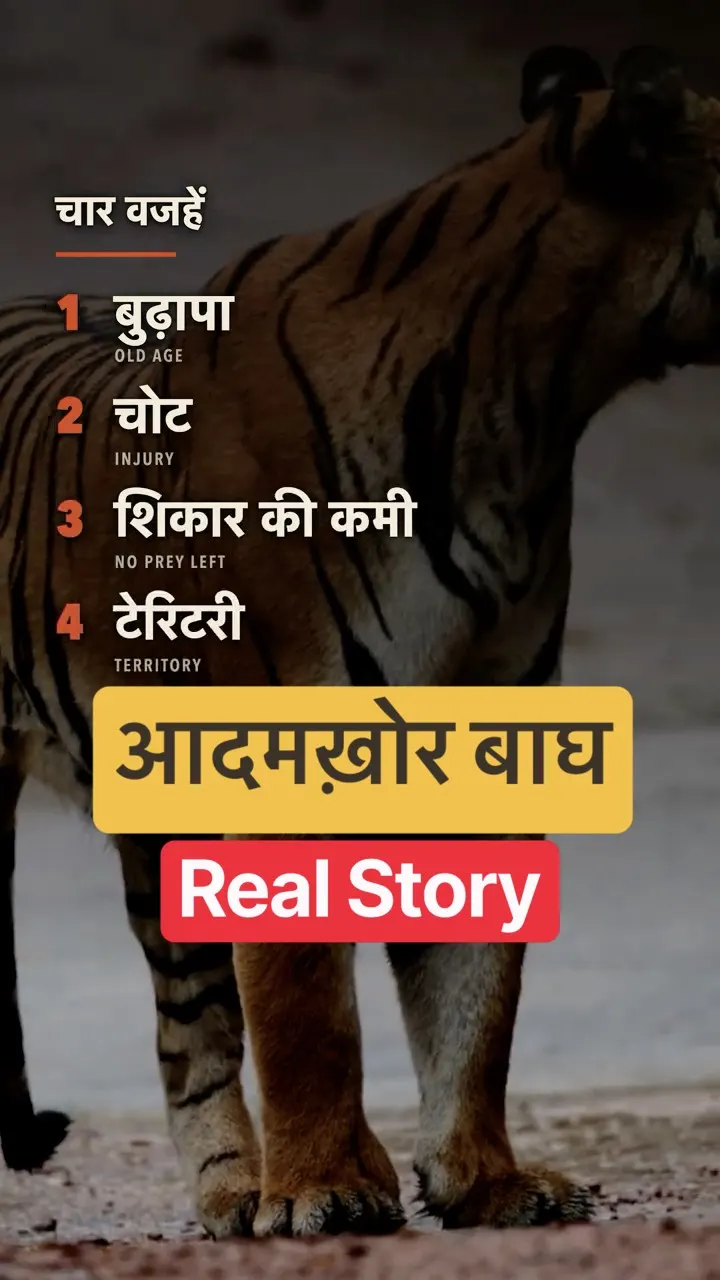
So when one starts, something has usually gone wrong first. Age, so the usual prey has become too fast. An injury that makes a real hunt impossible. Prey that has thinned out until there is not enough of it left. Or territory: a young male pushed out of the forest by a stronger one, with nowhere to go but the edges, where the edges are villages.
None of those are excuses, and none of them help the families of the three men. But they are the reason "shoot it" is not the automatic answer it sounds like. The tiger at the edge of the field is usually a symptom of something that happened deeper in.
Chapter three
The darts kept failing
The plan was the standard one, and on paper it is a good plan: find him, dart him, move him. A tranquillised tiger can be relocated. Nobody has to die, including the tiger.
It did not work. Not once, and not for want of trying. A dart needs a clear shot at close range from a team that knows exactly where the animal is, and T-122 did not offer any of that. The teams went out and came back, went out and came back. Every failed attempt was another day the villages could not use their own fields.
That is the pressure the department was under when it stopped trying to reach the tiger and started thinking about the problem backwards.
Chapter four
A cage the size of a house
The usual trap cage is a box. A tiger can see what it is from a distance and a tiger that has already been pursued for weeks is not walking into a box.
So they built one thirty feet long and thirty feet wide, reported as set up near Samda. Not a cage you put a tiger in. A cage big enough that walking into it does not feel like walking into anything at all. Officials described it as the first attempt of its kind in Maharashtra, and that is their characterisation of it rather than ours.
The logic was simple enough to say in one line. If we cannot get to the tiger, let the tiger come to us.
Around the twenty-fourth and twenty-fifth of October 2026, he did. No shot was fired. Nothing died. T-122 was taken alive, and five villages went back to work.
Chapter five
The question that is still open
It is a good ending, and it is worth sitting with how rare that is. In most versions of this story the tiger is shot, and everybody involved calls it a tragedy and means it. Here a team that had failed repeatedly tried something nobody had tried, and it worked, and the animal lived.
But a captured tiger has to go somewhere, and the forest he came from is still the same forest, with the same pressure on it, and the same edge where the trees meet somebody's field. The cage solved this week. Whether it solves anything after that is a harder question, and honestly, nobody answering it yet knows.